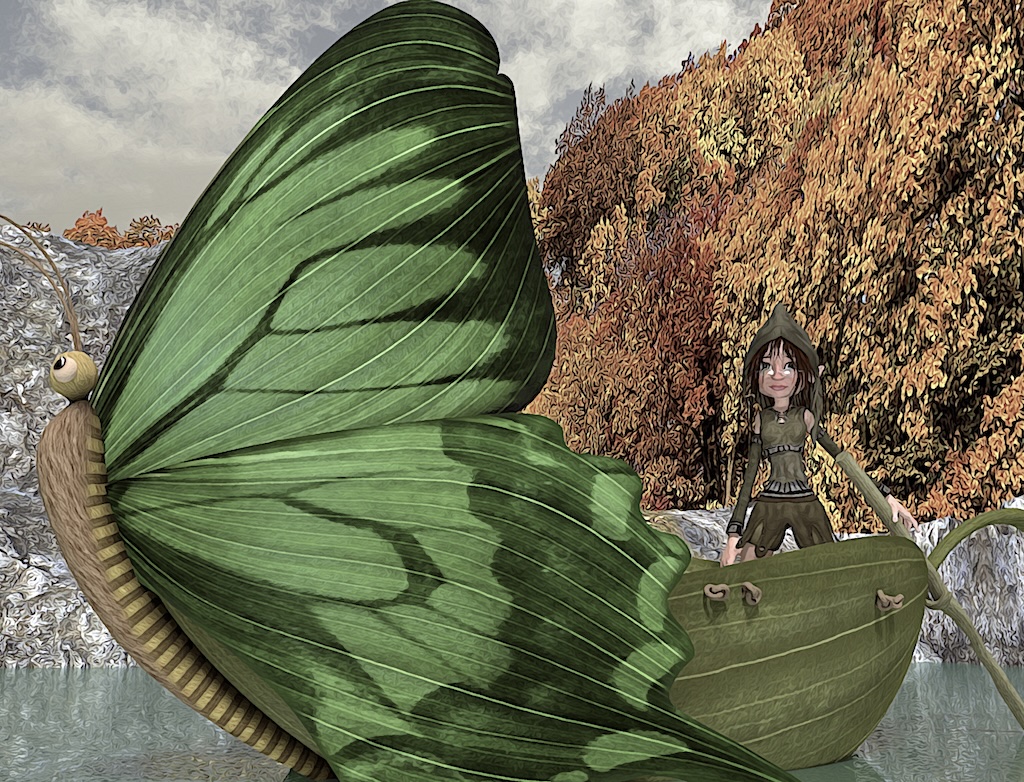
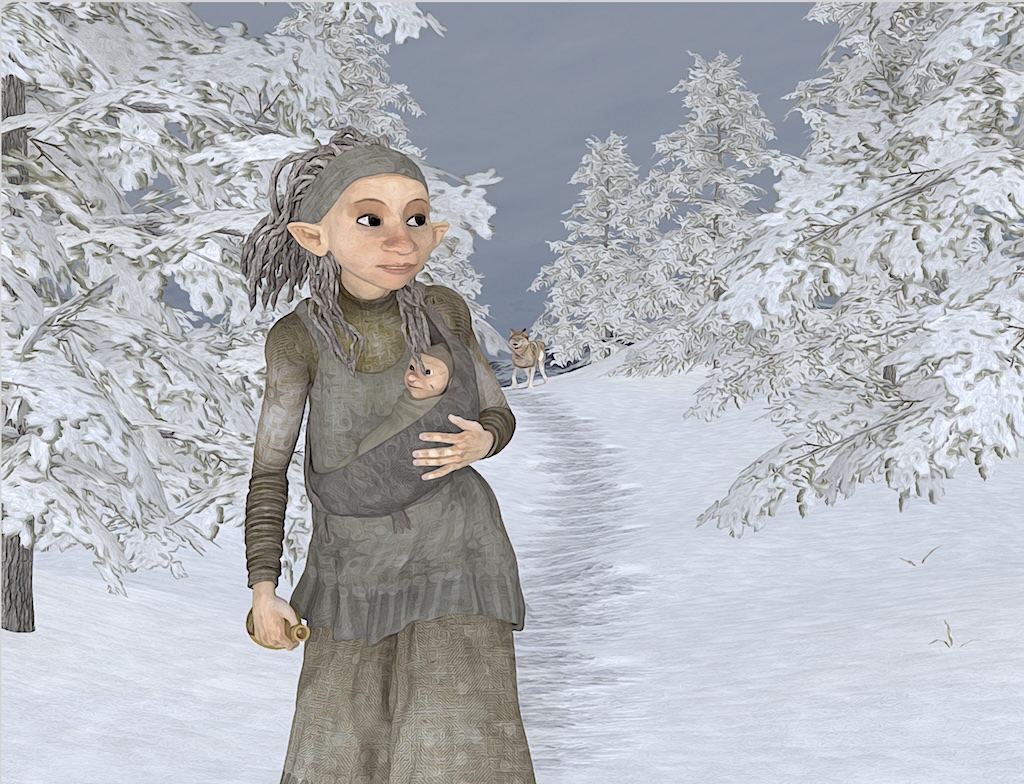
“I need time alone,” Mora muttered as she tended to the pigs.
Since her mother passed, she had cared for the farm each day while her younger brother worked in the mines.
“Do you think his Lordship will try to take the farm now that Mother is dead?” her brother asked this morning.
“It’ll be a cold day in Hell before I let that monster claim what is ours,” came the reply.
Taxes were due in seven days. If she could not pay, the government would take the land and sell it to the highest bidder.
“Too bad you can’t marry some rich landowner so we could stay here,” Daniel remarked.
“I’ve a better chance of marrying the Tooth-fairy,” his sister snapped.
After chores, Mora walked down to the dock. Releasing the launch’s moorings, she allowed it to drift on the pond’s still waters.
“I’ve tried my best, Mum. I can’t seem to make ends meet. I wish only to pay the tax and nothing more,” said the girl.
A golden fish swam past the boat, making Mora think of lost treasure.
“I could be lucky and find a buried Roman hoard and keep Lord Standish from stealing our land,” the girl said.
With the sun high in the sky, Mora caught a glint of something lying on the pond’s bottom.
“What’s this?” Mora asked.
The girl removed her glasses and slipped over the craft’s edge into the icy water.
“For luck,” Mora said as she took a deep breath and swam down.
“What have I found?” the girl asked as she broke the pond’s still waters.
Sitting in the craft, Mora turned the small shiny ball over and over in her hand.
“It doesn’t look like gold, but I bet I can sell it and get enough to pay the taxes,” said Mora.
“Hello, excuse me, Miss,” came a voice from the water.
Mora peered over the craft’s edge and saw the same golden fish floating next to the boat.
“Did you call me?” the girl asked.
“Yes, I did. If you would be so kind as to return my trifle, I assure you you’ll not regret it,” replied the fish.
Mora knew you didn’t argue with magical fish, so she carefully placed the orb in the animal’s fins.
“Don’t you worry about your home, child. All has been arranged.
“What? How do you know about my troubles?” remarked Mora to the fish, but he was already out of sight.
“I better get home and change out of these wet clothes,” mumbled the girl.
Mora told her brother what had happened, and shock spread across his face.
“Mora, on the way home, I noticed an old oak had fallen over, exposing its roots. They say the fae sometimes hide treasure under oak to keep it safe,” said Daniel.
Grabbing a lantern, the siblings made their way to the tree. “Look, near the center, it’s a small chest,” Daniel said.
Mora fetched a rope from the stable and tied it around the box. “Give me a hand pulling it out,” the girl said.
Once home, they cleaned off the dirt, and Daniel pried open the chest.
“The fish was right. We can save the house,” Mora said.
With the threat of eviction over, the siblings set about repairing the homestead.
One Autumn morning, a carriage pulled up next to the cottage and out stepped a handsome merchant.
“I have come to ask for your sister’s hand in marriage,” the man said.
“I’ll go fetch her straight away,” said Daniel.
After her brother explained that a wealthy man wanted to marry her, Mora marched out to confront the man.
“Morning, fine lady. I have traveled far to ask you to join me as my wife at my estate,” said the merchant.
Mora was about to send him packing when she noticed he was rolling a small shiny ball in his left hand.
“It would be an honor to wed a man as generous and kind as you,” replied Mora.
So Mora moved to the man’s estate, while Daniel remained and cared for the cottage. In time Daniel wed as well. No matter how poor others’ crops fared, Daniel always produced a bountiful harvest.
Mora and the Merchant had four lovely daughters. As far as I know, they are still living happily in their castle by the sea.



Leave a Reply